Agile Principles Unlocked: An Online Guide for Aspiring Project Managers and Scrum Masters

Updated: Sep 11, 2023
Intro:
Hello, future project manager or scrum master! Thanks for stopping by! If you came here for information on Agile principles and how to apply them, you're in the right place. To give some context to those who may not know what Agile methodology is, Agile methodology is a project management framework that breaks projects down into several dynamic phases, commonly known as sprints. The Agile Methodology has transformed project management and we are here to show you how it rose to success and why you should become familiar with it. We hope you enjoy this post as it will equip you with the tools and resources needed to progress in your project management knowledge.

Sprint 1: Agile Principles in Depth
The Agile methodology has a simple goal but the application of it can be difficult to understand those that aren't familiar with it. With that being said I would like to give an overview of the agile fundamentals. The Agile methodology is really more of a mindset than anything else. This mindset is one that is Customer/Client-focused and able to change plans /priorities. This encourages adaptability and allows the team to work closely with the customer. Agile is broken down into 12 Key principles.
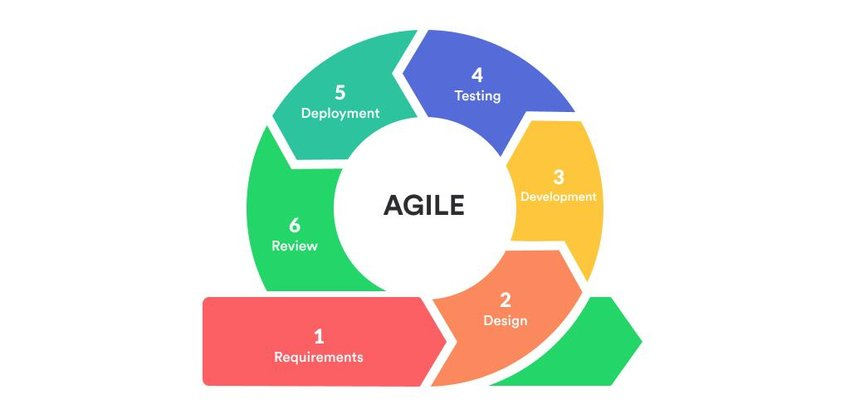
https://www.researchgate.net/figure/Agile-Methodology-in-System-Development-source-Okeke2021-retrieved-from_fig1_354310848
The 12 Key Principles of Agile Development
1. Customer Satisfaction: This is putting the customer's needs as a number one priority. We can do this by meeting with the customer frequently and keeping them informed the whole way through. This will establish a mutual understanding of the project's scope and any potential roadblocks that may occur. This collaborative approach allows for teams to catch potential issues early, while also saving time and resources.

https://th.bing.com/th/id/OIP.PG5SAaOHg4FL_XUQ8H8lewHaE7?pid=ImgDet&rs=1
2. Be ready for Change: Always welcome changing requirements, even when the current place in development is late. Agile is made to handle changing requirements and the various issues that will arise during the project. Embracing change late in development will almost always require adjustments, but it should be able to handle most adjustments without significant delays or disruptions.

https://qph.cf2.quoracdn.net/main-qimg-d2e560a68d329fc5d35169f825a28fd6
3. Frequent Deliveries: This is Delivering a working product frequently, preferably with short gaps in between. This will keep you and the client close during the project and foster transparency. This will also allow the customer to point out issues and key pain points on a foundational level.

- Conveyor belt to symbolize continuous delivery
https://www.bastiansolutions.com/assets/1/6/iHerb-conveyor-sortation-system-blogpost.jpg
4. Group Collaboration: The Business and the developers should always work together daily for a smooth project success. Regular communication is crucial for seamless interactions.
5. Team Motivation: Build your teams around motivated individuals. Build a healthy environment for the team to flourish. Trust your team to get the job done. This trust will in turn motivate the team to work their hardest.
6. Face-to-Face Communication: Conversations face-to-face are the best way to communicate with a development team. Context and Nuance to specific topics are easier to distinguish in a face-to-face conversation.
7. Measure Progress with Working Software: Using software to measure working progress is a great way of tracking progress on a project. Prioritizing deliverables allows for more progress to be made for the design goals and potential changes to be made quickly and efficiently.

https://s3.amazonaws.com/www-inside-design/uploads/2018/04/progress-bar-square.jpg
8. Sustainable Development: Agile promotes a sustainable and healthy work environment. Establishing a consistent pace will eliminate the need for overtime and allow a healthy work-life balance.
9. Technical Excellence: Making sure that work is well thought through and well designed is key when it comes to agile. Due to the nature of agile software design should be getting better with each iteration.
10. Simplicity: This principle emphasizes the importance of keeping projects and tasks simple and to the point. Agile teams usually focus on delivering value to customers by staying on top of the necessary tasks. By doing this they can reduce wasted time, stay efficient, and maintain a clear focus on what the project is requiring. this leads to a better end product and a more adaptable approach.

https://thumbs.dreamstime.com/x/simplifying-complex-confusion-clarity-path-vector-idea-concept-lightbulbs-doodle-illustration-253428891.jpg
11. Self-Organizing Teams: Agile really appreciates the idea that the most effective solutions come from teams with their own sense of individuality and autonomy. This gives the team the ability to organize their own work, encourage innovation, and foster a sense of ownership and commitment amongst the team members. This reduces the need for excessive control and allows the development team to produce the best work they can.
12. Continuous Improvement: Agile is a framework that adheres to the idea of constant self-assessment and reflection. Processes are routinely analyzed with optimizing workflows and skill enhancement in mind. This commitment to improvement guarantees steady progress and superior outcomes. Through this continuous feedback, agile teams refine their methods and continue to become as efficient as possible.

https://1.bp.blogspot.com/-gqxmI_qqfWk/XwPgSSHoOJI/AAAAAAAAlv0/QpCqb2hq61UgnYO70otLfmH9vu_sN1aCwCK4BGAsYHg/s873/Blog%2B-%2Bcontinuous%2Bimprovement.JPG
Agile Frameworks
Agile Works very well when it is used in a framework that makes use of its best qualities. Two very popular frameworks for agile are SCRUM and Kanban. We will be going over both of these frameworks so you can get an understanding of them and what they do best.
SCRUM Framework
Scrum is a very popular and influential framework and is known for its incremental approach.
Sprints: These are time slots usually between 2-4 weeks where a specific set of work is completed. Sprints provide a sense of urgency and help teams focus on delivering a working product in small advances.
Scrum roles: Scrum has specific roles defined, including the Scrum master (The person responsible for facilitating the process), The Product Owner (responsible for defining and prioritizing the backlog and business requirements), and the development team (which is responsible for developing and delivering the product).
Artifacts: Scrum utilizes different artifacts such as the Product Backlog (A list of working priorities), The Sprint Backlog (the work that is to be completed during the sprint)

KanBan Framework
While wanting to achieve the same goals as Scrum, Kanban goes about it in a bit of a different way. Kanban focuses on visualizing work, limiting work in progress, and maximizing efficiency. There are key components of Kanban that set it apart from the scrum.
Kanban Board: The Kanban Board is a visual tool that represents work items in various stages of completion. It lets teams see their current workflows and find pain points to improve on.
Work in Progress(WIP) Limits: Kanban sets limits on the number of items that can be in progress at the same time. This prevents tasks from stacking up and overloading. This promotes a steady continuous flow.
Pull System: Work is pulled through the system as space becomes available. This ensures a balance between the amount of hands that are on deck, and the realistic demand needs that they can meet.

Final conclusion
Congrats! Your new journey with Agile has begun! Agile principles bring a lot of positive practices to the table. the focus on the customer, being adaptable, and valuing delivery will guide you in the right direction. Remember that agile is not just a methodology but a mindset, a mindset that promotes project excellence. By learning the aforementioned principles and referring to the illustrations, you have the necessary tools to get started with your agile journey.


Comments