Scheduling Success: Managing Project Timelines
Updated: Oct 11, 2023
Introduction
For Project management to be realized effectively, planning, execution and control must be balanced appropriately to meet project deadlines and effectively deliver products on time. To achieve this balance a well thought out elaborate schedule must be planned and executed effectively, since the schedule will establish the roadmap that will guide you through the project and make sure you meet deadlines. As a project manager you must careful create these schedules and make sure they reflect deadline, resource or other requirements since this will make or break the success of your project. By the end of this blog post you should be well equipped with knowledge to create and execute schedules efficiently to better improve project timeline management.

The Foundation of Scheduling
When planning your next schedule for your project, one must consider the main key aspects of Scheduling. As a project manager it is important to be well versed in the fundamentals before moving on to the more specific aspects of scheduling. We must always keep in mind, that schedules must always be planned out to be dynamic, almost every project has some unexpected change or something that comes up that will either affect project deadline, delay work, or simply affect workflow; this means that when planning for your upcoming project, you must also consider some "wiggle room" and expect your schedule to change throughout the projects process. This also means that start and end dates for for each task must be outlined loosely still emphasizing to the rest of the team when these changes must be completed by, to allows for the project to be completed on time.
Task Dependencies (Work Flow)
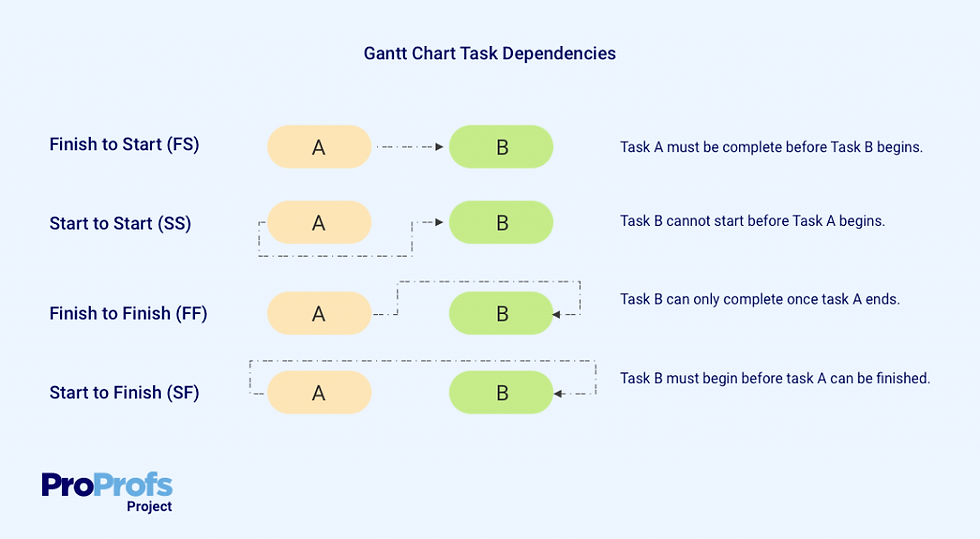
An important aspect of scheduling and project management is task dependencies, this basically means task that may depend on each other, for example When organizing for an upcoming concert, two task may be assigned when planning one may be getting electricity to the stage, and another is calibrating the sound system and speakers on the stage; this creates a dependency since one may not be able to calibrate the sound systems before having power set to the stage. Dependencies can affect different deadlines and work flow, since task that depend on another may not start without finishing one. When planning your task you must look ahead to future task and make sure not task is idle due to poor scheduling of task. Task dependencies can be classified into four main types: finish-to-start, start-to-finish, finish-to-finish, and start-to-finish. Each one of these have their own implications when scheduling, and as a project manager this it important to know and keep in mind. Failure to manage task dependencies will cost you greatly, so planning a work flow ahead of time will save your team time and create more wiggle room in case your team needs to either add another task to your schedule or work on one longer.
Task Assignment (Who Works What?)
Next key aspect to learn about project scheduling is to allocate man power to task, this is a crucial aspect of project scheduling since this could also make or break your efficiency. Many things need to be considered when assigning task, an important one is to have the right person for the right task, going back to the previously mentioned example of the concert, lets say an all girl band is playing this weekend, and their entire brand uses color such as blue and white, for this task we need to set up decorations on the stage that fit their brand and match their color. For this task I know Josh (a team member) is very creative, and would both complete the task effectively and quicker than my other teammates, so immediately Josh will be assigned for this task. This shows how planning the right person for the right task increases efficiency and maintains the rest of the team on track.
Next part of task assignment we must consider is the amount of man power we may assign a task. So for this we must be careful, for example if a simple task must be assigned, and we know the task is simple and can be done quickly by one person, then there is no need to assign an extra person to a job since assigning multiple people to one task may take extra planning and coordination, and thus resulting in delivery delays, and even costs. On the other hand allowing two people to work on a task even considering the extra coordination may increase productivity, for example a heavy lifting task or a task that requires a lot of moving around.

https://www.youtube.com/watch?app=desktop&v=hivHNLqlXes Scheduling Tools
Another key element to consider when planning your next schedule is to consider using scheduling tools. Though scheduling on paper could work (many of us have done this before) scheduling softwares may increase the proficiency of these schedules. I have personally worked at a company named Dization, where they offer many tools to help with this, on their software they allow for easy task assignment, duration of jobs and even track the pay and cost of each one of these task, this allowed for managers to better plan workflow and allow the entire team to meet deadlines.
These softwares often may be expensive, but another tool you could use is a simple excel or google sheets to create your schedule. These tools can be a gam changer for scheduling, some allow you to set task dependencies, and allow you to easily make changes as needed.

Conclusion
In the world of project management, scheduling is an important part of project management and when creating these, many key elements must be kept in mind. Task dependencies to not let task to be idle and left behind, task assignment, who works on what? and even considering using scheduling tools for your next project. For your upcoming project, plan these things out, make sure to consider all these elements and be able to efficiently manage all these elements.
References


Comments